Do You Have Any of These Symptoms?
If any of this sounds familiar, you’re in the right place. Call us or request an appointment online.


Expert arterial ulcer treatment in Rolesville, NC. Advanced wound care with circulation testing, debridement, and comprehensive treatment focused on promoting healing, improving blood flow, and preserving limb health. If any of this sounds familiar, you’re in the right place. Call us or request an appointment online. Arterial ulcers are serious, but treatable. Arterial ulcers, also called ischemic ulcers, develop when arteries can’t deliver enough oxygen-rich blood to the lower legs and feet. The wounds are typically found on the toes, heels, or outer ankles, are deep and painful, and heal slowly or not at all without restoring circulation. Treating an arterial ulcer starts with diagnosing the circulation problem. At Ironworks we work closely with vascular surgeons to restore blood flow when possible, then focus on oxygen delivery, debridement, and infection control. An arterial ulcer visit is primarily about diagnosis: confirming the circulation problem and deciding whether vascular intervention is needed before wound treatment. Bring a complete medication list and any recent cardiovascular test results. New patients are welcome, and most major insurance is accepted. Call us, request an appointment online, or stop by our Rolesville office. We’ll take care of the rest.
Arterial Ulcer Treatment
Do You Have Any of These Symptoms?
A painful wound on the toes, heel, or outer ankle
Cold or pale feet, especially compared to the other foot
Pain in your legs when you walk that eases with rest
Pain that worsens at night when you lie down
Schedule An Appointment
A wound that's gotten worse rather than better over time
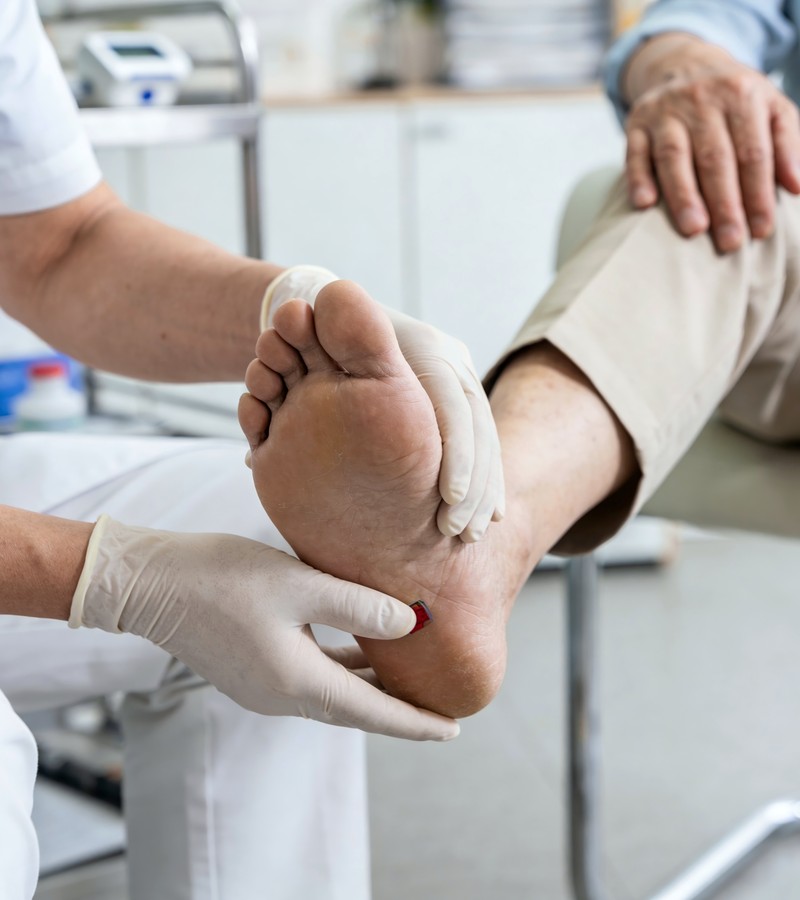

You’re Not Alone, and You Have Options
Our approach
Non-invasive vascular testing (ABIs, pulse exam)
Referral to vascular surgery when revascularization is needed
Careful debridement (arterial wounds require a lighter touch than diabetic ulcers)
Schedule An Appointment
Pain management, arterial ulcers can be extremely painful, and we take that seriously
What to Expect at Your First Visit
Detailed history including smoking, cardiovascular disease, and leg pain with activity
Physical exam of pulses, skin, and temperature in both legs
Non-invasive vascular testing (ABIs) to measure blood flow
Assessment of whether you need referral to a vascular surgeon for circulation testing
Gentle debridement if appropriate (not as aggressive as for venous or diabetic ulcers)
Initial dressing plan and pain management strategy
Schedule An Appointment
Coordination with vascular specialists if revascularization may help

Frequently Asked Questions
Ready to get started?