Do You Have Any of These Symptoms?
If any of this sounds familiar, you’re in the right place. Call us or request an appointment online.


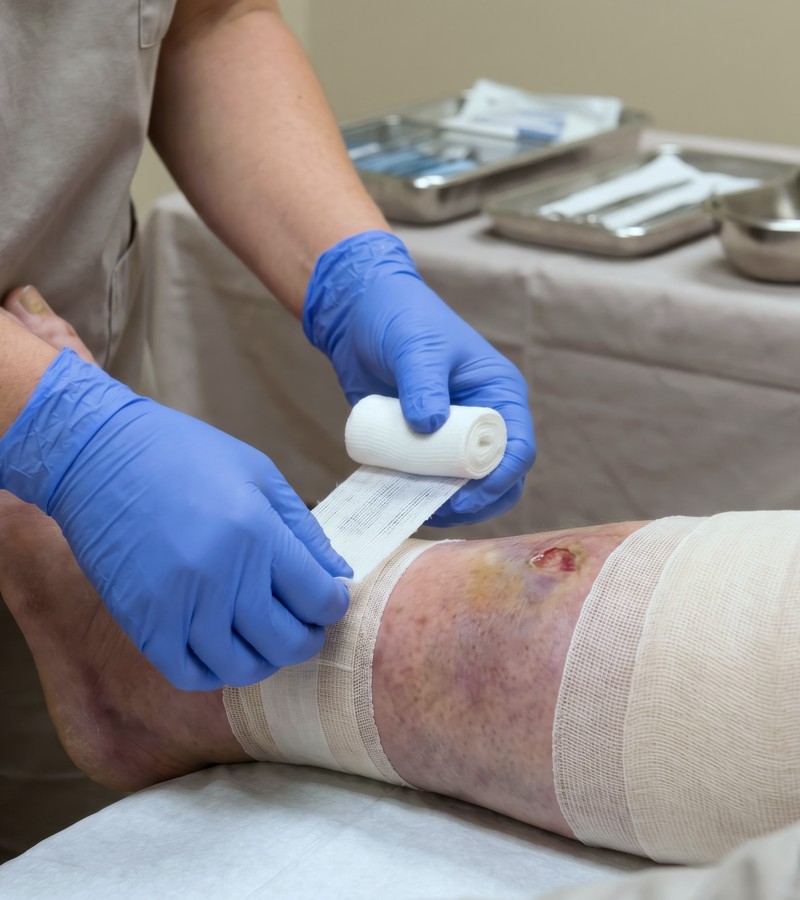
Venous stasis ulcer treatment with compression therapy in Rolesville, NC. Heal chronic leg ulcers with expert wound care at Ironworks. If any of this sounds familiar, you’re in the right place. Call us or request an appointment online. Venous ulcers respond extremely well to proper compression therapy and advanced wound care. Venous stasis ulcers are slow-healing wounds that develop on the lower legs when the veins can’t pump blood back up to the heart efficiently. Blood pools, pressure builds, and eventually the skin breaks down. They’re extremely common in older adults and in people with a history of DVT, varicose veins, or leg swelling. The cornerstone of treatment is compression therapy. Without compression, venous ulcers rarely heal. With the right compression wraps, advanced dressings, and vein-focused care, most venous ulcers close within 12–16 weeks. Because venous ulcers are treated very differently from arterial ulcers, the first visit starts with a careful diagnosis before any compression is applied. Wear loose pants that can be rolled up above the knee. New patients are welcome, and most major insurance is accepted. Call us, request an appointment online, or stop by our Rolesville office. We’ll take care of the rest.
Venous Stasis Ulcer Treatment
Do You Have Any of These Symptoms?
A slow-healing wound on your lower leg, usually near the ankle
Swelling, heaviness, or aching in the legs by the end of the day
Darkened or discolored skin around the ankles
Varicose veins in the same leg as the wound
Schedule An Appointment
A wound that weeps or drains fluid frequently
 Schedule An Appointment
You’re Not Alone, and You Have Options
What to Expect at Your First Visit
History and physical exam focused on venous health
Non-invasive vascular testing to confirm the wound is venous and safe for compression
Wound measurement, photography, and tissue assessment
First application of multi-layer compression therapy
Advanced dressing selection based on drainage level
Education on elevation and daily routine to support healing
Schedule An Appointment
Schedule for weekly compression changes until the wound closes
Frequently Asked Questions
Ready to get started?