Do You Have Any of These Symptoms?
If any of this sounds familiar, you’re in the right place. Call us or request an appointment online.


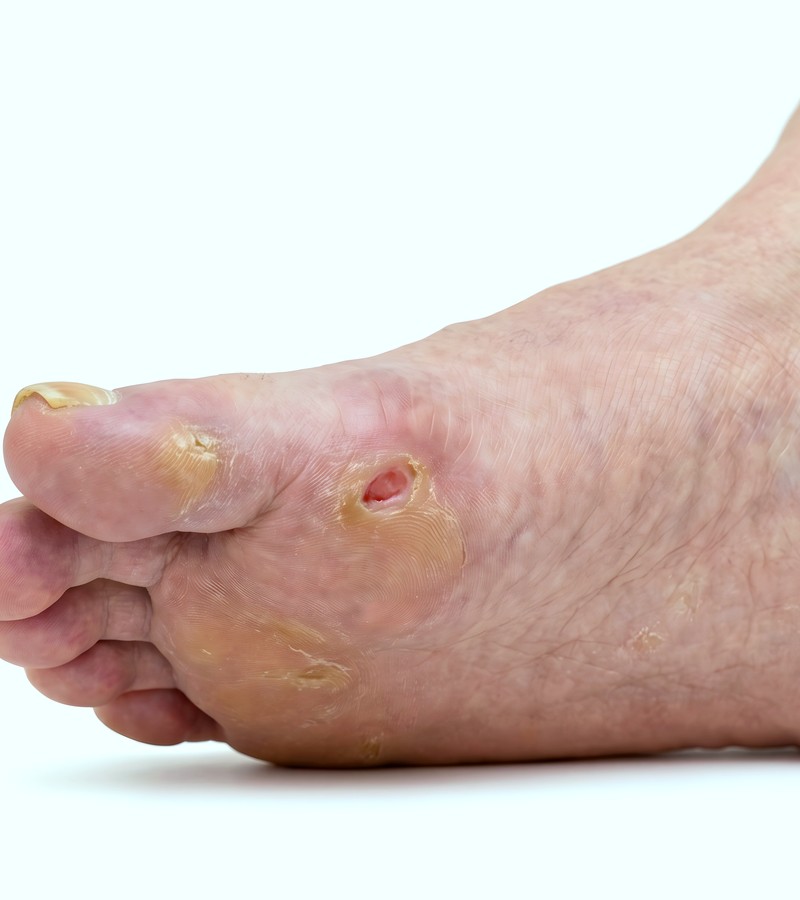
Advanced diabetic foot ulcer treatment in Rolesville, NC. Expert wound care services including debridement and bioengineered grafts to promote healing and help prevent complications. If any of this sounds familiar, you’re in the right place. Call us or request an appointment online. The vast majority of diabetic foot ulcers can be healed, and amputation is almost always preventable when treatment starts promptly. A diabetic foot ulcer is a wound, usually on the bottom of the foot, that develops in someone with diabetes and won’t heal on its own. About 15% of people with diabetes will develop one. If not treated, these ulcers are the leading cause of lower-limb amputation in the United States. Here’s the hopeful part: with expert, timely treatment, the vast majority of diabetic foot ulcers heal. At Ironworks, we combine aggressive debridement, infection control, bioengineered skin grafts, and specialized offloading devices to close these wounds and keep them closed. A diabetic ulcer visit is always treated as time-sensitive. Your first visit includes a thorough assessment, followed by the first treatment, which starts the same day. Bring a list of your medications, your blood sugar log if you have one, and any previous imaging. New patients are welcome, and most major insurance is accepted. Call us, request an appointment online, or stop by our Rolesville office. We’ll take care of the rest.
Diabetic Foot Ulcer Treatment
Do You Have Any of These Symptoms?
An open sore on your foot that hasn't healed in 2 or more weeks
Any drainage, redness, warmth, or odor from a wound on your foot
A callus with darkening or bruising underneath it
Unexplained swelling in one foot
Schedule An Appointment
Loss of sensation that makes it hard to notice foot injuries

You’re Not Alone, and You Have Options
Our diabetic ulcer protocol
Initial assessment, wound measurement, photograph, vascular testing, and culture if infection is suspected
Debridement, surgical removal of dead tissue to expose healthy tissue underneath
Offloading, custom boot, total contact cast, or wheelchair to eliminate pressure on the wound
Advanced therapies, skin grafts or for wounds not responding to standard care
Weekly follow-up until closure
Schedule An Appointment
Prevention plan, custom diabetic shoes and insoles to prevent recurrence
What to Expect at Your First Visit
Complete medical history focused on diabetes control, circulation, and nerve function
Measurement, photography, and classification of the wound
Non-invasive vascular testing to check blood flow
Cultures if infection is suspected
Initial debridement (removal of dead tissue) at the same visit, under local anesthesia if needed
Custom offloading device (boot or cast) to take pressure off the wound
Schedule An Appointment
Weekly follow-up plan and insurance authorization for advanced therapies if needed
Frequently Asked Questions
Ready to get started?